



1. 简介
2. 设计考虑
3. 操作及维修
4. 记录/ 文件记录
Introduction

1.1 About This Handbook
(1)
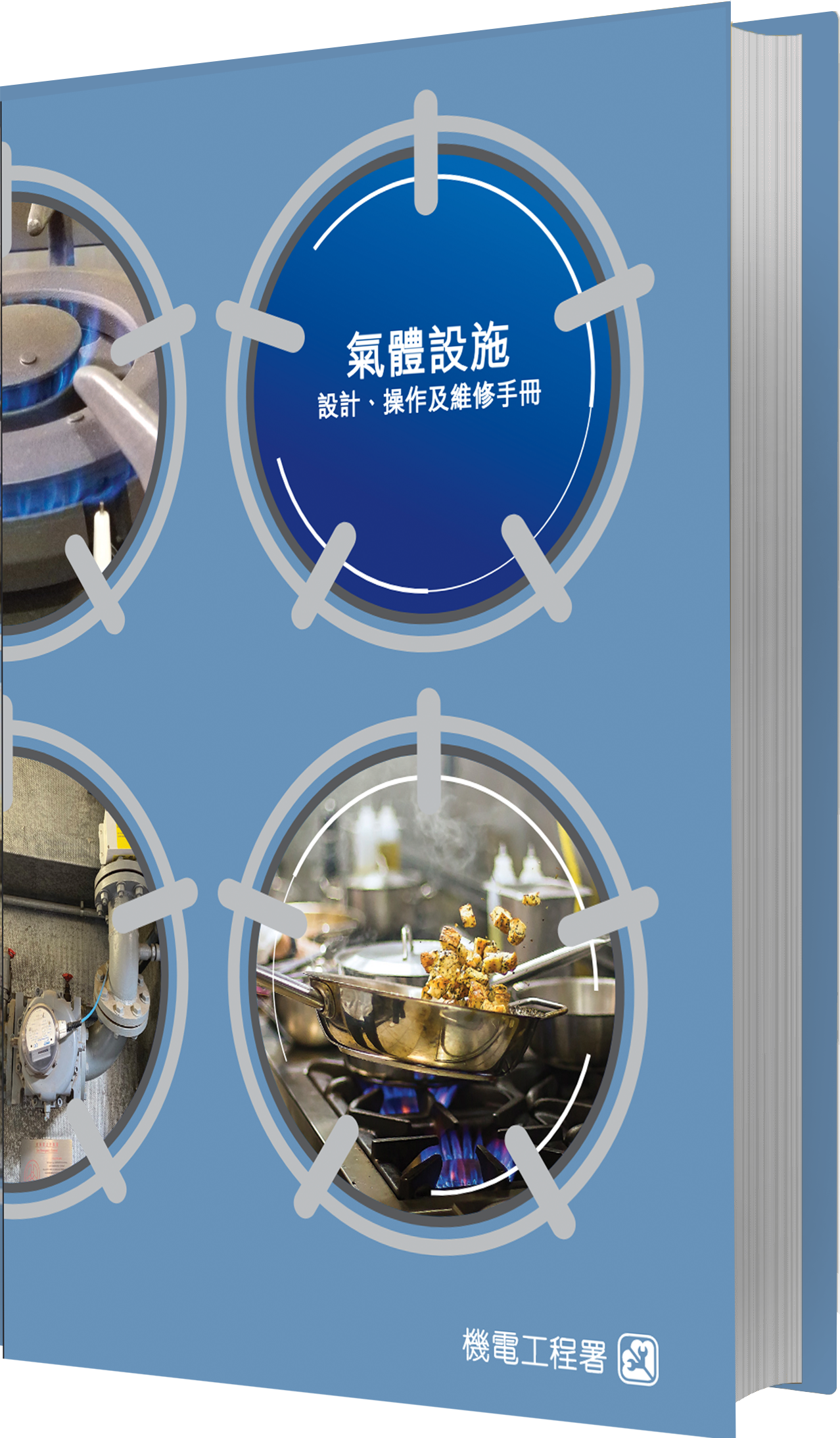
This Handbook recommends good system design and operational practices in principle for town gas installation and Liquefied Petroleum Gas (LPG) installation in commercial kitchens. Similar concepts also apply to domestic kitchens.
(2)
This Handbook covers “General Practice” and “Best Practice” associated with the design consideration, operation and maintenance of gas installations in commercial kitchens. “General Practice” refers to general requirements in fulfilling statutory requirements and guidelines as well as aligning common practices in the trade. Whilst “Best Practice” helps to further enhance the safety performance of gas installations by considering exemplary practices and innovative technologies identified at the time of preparation and revision of this Handbook.
(3)
This Handbook also introduces to readers the application of smart meters and gas detectors for gas installations in kitchens. Application of these safety devices can enhance operational safety of gas installations. They may also be installed at other areas with gas installations such as pipe ducts, food factories, laundries, etc.

1.2 Target Audience
(1)
The target audience of this Handbook is primarily trade operators including Registered Gas Supply Companies (RGSC), Registered Gas Contractors (RGC), Registered Gas Installers, LPG distributors, etc.
(2)
In daily operation, gas safety relies on the daily practices of restaurant owners and kitchen operators, and trade operators may be consulted by their customers regarding gas safety and technical advices. In this regard, information and recommendations in the interest of the owners and responsible persons of catering premises (hereinafter called “owners”) using gas fuel, as well as staff of management office who may have to deal with catering tenants consuming gas, are also given in this Handbook as reference.

1.3 Related Ordinances, Regulations and Guidelines
(1)
Requirements for other gas installations, such as domestic gas water heaters and ventilation systems, and other gas safety measures are given in the undernoted ordinances, regulations and codes of practice, etc. Readers may refer to these documents for further information:-
a)
Gas Safety Ordinance (Cap.51)
b)
Gas Safety (Gas Supply) Regulations (Cap.51B)
c)
Gas Safety (Installation and Use) Regulations (Cap.51C)
d)
Gas Safety (Registration of Gas Installers and Gas Contractors) Regulations (Cap.51D)
e)
Gas Safety (Registration of Gas Supply Companies) Regulations (Cap.51E)
f)
Gas Safety (Miscellaneous) Regulations (Cap.51F)
g)
Code of Practice GU01 – Approval of Flexible Gas Tubing for Low Pressure Applications
h)
Code of Practice GU03 – Installation Requirements for Domestic Gas Water Heaters (Rated Heat Input up to 70kW)
i)
Code of Practice GU05 – Approval of Domestic Gas Appliances
j)
Code of Practice GU06 – LPG Installations for Catering Purposes in Commercial Premises
k)
Code of Practice GU09 – Low Pressure Regulators for Suppling Gas from LPG Cylinders having less than 40 litres Water Capacity
l)
Code of Practice GU12 – Installation of Mechanical Exhaust System for Gas Appliances (Rated Heat Input up to 70kW)
m)
Code of Practice GU14 – Enclosed Type of Gas-fired Meat Roaster
n)
Code of Practice GU15 – Flexible Gas Tubing for Commercial Applications (Not Including Flexible Gas Tubing for Low Pressure Applications)
o)
Guidance Note GU16 - Medium Pressure LPG Gas Appliances
p)
Code of Practice GU21 – Requirements for Town Gas Installations for Catering Purposes in Restaurants and Food Preparation Establishments
q)
The Hong Kong & China Gas Co. Ltd.’s Operating Procedures – Service
订阅更新
为了订阅时事通讯或激活电子邮件通知和内容更新,您可以按照下面描述的几个简单步骤进行操作。它允许用户在机电工程署添加或修改内容时接收定制的电子邮件通知。
订阅
x
订阅更新
我们只会向您电邮您所订阅的更新,而您亦可以随时取消订阅。